
Healthcare AI Copilots: Reducing Workload and Improving Patient Outcomes
The New Standard for Healthcare AI: Intelligent Copilots That Reduce Workload and Improve Outcomes
Healthcare is under constant pressure to do more with less. Clinicians are expected to see more patients, document more thoroughly, coordinate across complex systems, and still deliver compassionate care. At the same time, administrative burdens keep growing, and burnout remains a serious concern. In this environment, Healthcare AI is no longer just a future possibility. It is becoming a practical necessity.
The most promising shift is not toward replacing healthcare professionals, but toward supporting them with intelligent copilots. These AI-powered assistants are designed to reduce workload, streamline routine tasks, and help clinicians focus on what matters most: patient care.
What Is an Intelligent Copilot in Healthcare?
An intelligent copilot is an AI system that works alongside clinicians and staff in real time. Instead of acting as a standalone automation tool, it assists with everyday tasks, decision support, documentation, and workflow coordination.

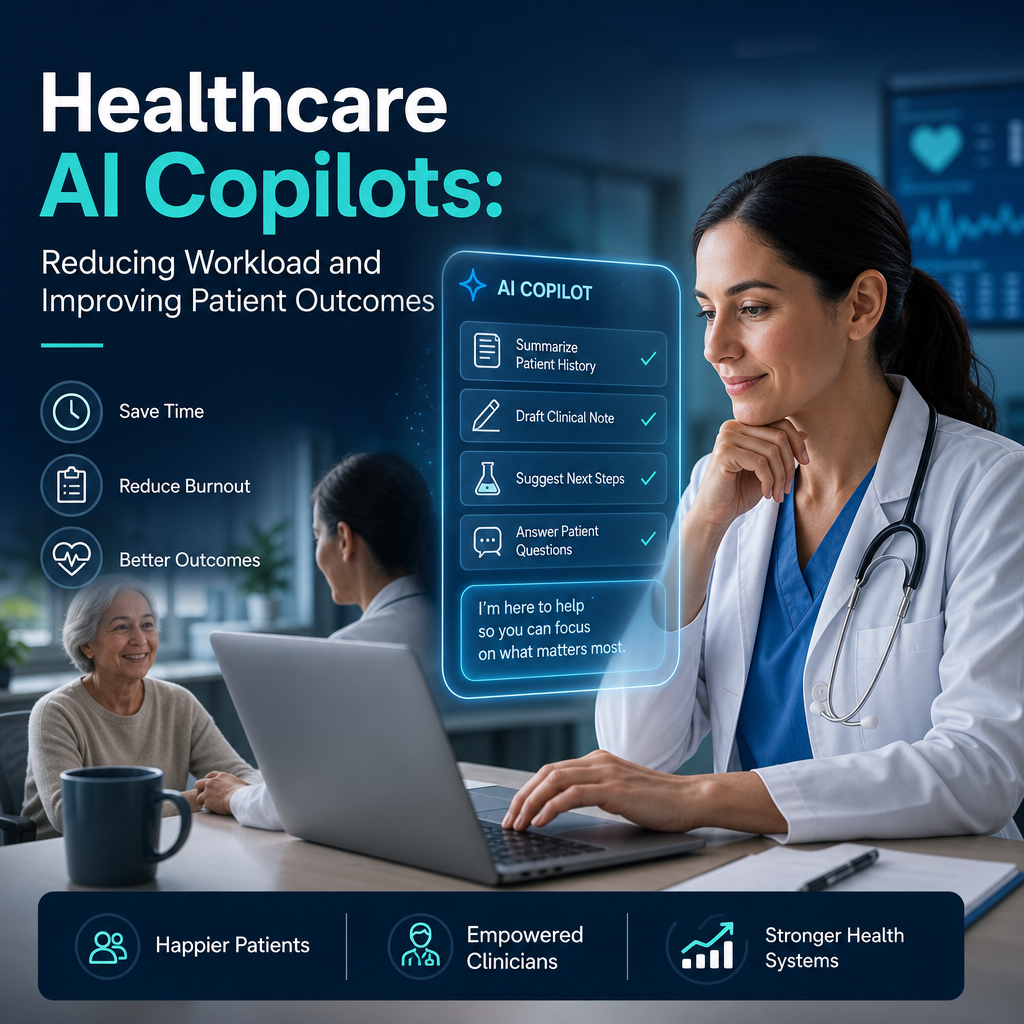
Think of it as a digital partner that can:

- Draft clinical notes from conversations
- Summarize patient histories
- Suggest next steps based on available data
- Flag missing information in records
- Help route tasks to the right team member
- Support patient communication and follow-up
This approach is different from traditional healthcare software. Rather than forcing clinicians to adapt to rigid systems, intelligent copilots adapt to the way care teams actually work.
Why Healthcare Needs a New Approach
Administrative work now consumes a significant share of a clinician’s day. Documentation, prior authorizations, chart review, scheduling, and inbox management all take time away from direct patient care. For many providers, the result is stress, fatigue, and reduced job satisfaction.
A well-designed Healthcare AI copilot can ease these burdens by handling repetitive, low-value work. That creates more space for empathy, clinical judgment, and meaningful patient interaction.
The goal is not to remove the human from healthcare. The goal is to remove friction from the system.
How AI Copilots Reduce Workload
One of the biggest strengths of intelligent copilots is their ability to automate or accelerate tasks that are essential but time-consuming. When implemented well, they can significantly reduce cognitive load for physicians, nurses, and administrative staff.
1. Documentation Support
Clinical documentation is one of the most common sources of burnout. AI copilots can transcribe conversations, organize notes, and generate draft summaries for review. This can save valuable time while improving consistency.
2. Smarter Information Retrieval
Instead of searching through multiple systems and records, clinicians can ask the copilot to surface relevant data quickly. That might include previous diagnoses, medication history, lab trends, or recent specialist notes.
3. Workflow Assistance
Healthcare teams often lose time coordinating handoffs and managing tasks. An AI copilot can help prioritize actions, assign responsibilities, and remind staff about pending items.
4. Patient Communication
Copilots can assist with writing follow-up messages, instructions, and educational materials in clear language. They can also support multilingual communication, making care more accessible.
Improving Outcomes Through Better Support
Reducing workload is important, but the real value of Healthcare AI lies in its ability to improve outcomes. When clinicians have better support, they can make faster, more informed decisions and spend more time with patients.
Intelligent copilots can contribute to better outcomes in several ways:
- Fewer documentation errors through structured note generation
- Improved care coordination by keeping teams aligned
- Earlier intervention by surfacing risks or missing follow-ups
- More personalized care through faster access to relevant patient context
- Greater patient engagement through clearer communication
These benefits can lead to more efficient care delivery, fewer delays, and a better overall patient experience.
What Makes a Good Healthcare Copilot?
Not all AI tools are ready for clinical use. A strong Healthcare AI copilot must be accurate, secure, and designed with real workflows in mind. The best systems are built to assist, not override, professional judgment.
Key qualities include:
Trust and Transparency
Users should understand how the copilot generates suggestions and where its information comes from.
Safety and Compliance
Any system handling patient data must meet strict privacy and regulatory requirements.
Ease of Use
If the tool adds complexity, it will not be adopted. A good copilot fits naturally into existing workflows.
Human Oversight
The final decision should always remain with the clinician. AI should support judgment, not replace it.
The Human-AI Partnership in Healthcare
The future of healthcare will likely be shaped by collaboration between people and machines. Intelligent copilots are not about eliminating healthcare professionals. They are about giving them better tools to perform at the top of their training.
When AI handles routine tasks, clinicians can focus on diagnosis, care planning, patient trust, and complex decision-making. Nurses can spend more time monitoring and educating. Administrative teams can work more efficiently. Patients can receive faster, clearer, and more coordinated care.
That is the real promise of Healthcare AI: not automation for its own sake, but support that makes care more human.
A New Standard Is Emerging
As healthcare systems continue to evolve, intelligent copilots are setting a new expectation for what technology should do. They should reduce workload, improve accuracy, and help teams deliver better outcomes without adding burden.
Healthcare AI is moving beyond experimental pilots and into practical everyday use. The organizations that embrace this shift early will likely be better positioned to support their staff, serve their patients, and adapt to future demands.
The new standard is clear: technology should work with clinicians, not against them.