
How Agentic Workflow Automation Is Transforming Healthcare Operations in 2026
How Agentic Workflow Automation Is Transforming Healthcare Operations in 2026
Healthcare operations in 2026 are under more pressure than ever. Providers are expected to deliver faster care, reduce administrative burden, improve patient satisfaction, and control costs—all while dealing with staffing shortages and increasingly complex compliance requirements. In this environment, agentic workflow automation is becoming a game-changer.
Unlike traditional automation tools that follow fixed rules, agentic systems can understand context, make decisions within boundaries, and coordinate multi-step tasks across teams and platforms. For healthcare organizations, this means less time spent on repetitive work and more time focused on patient care.
What Is Agentic Workflow Automation?
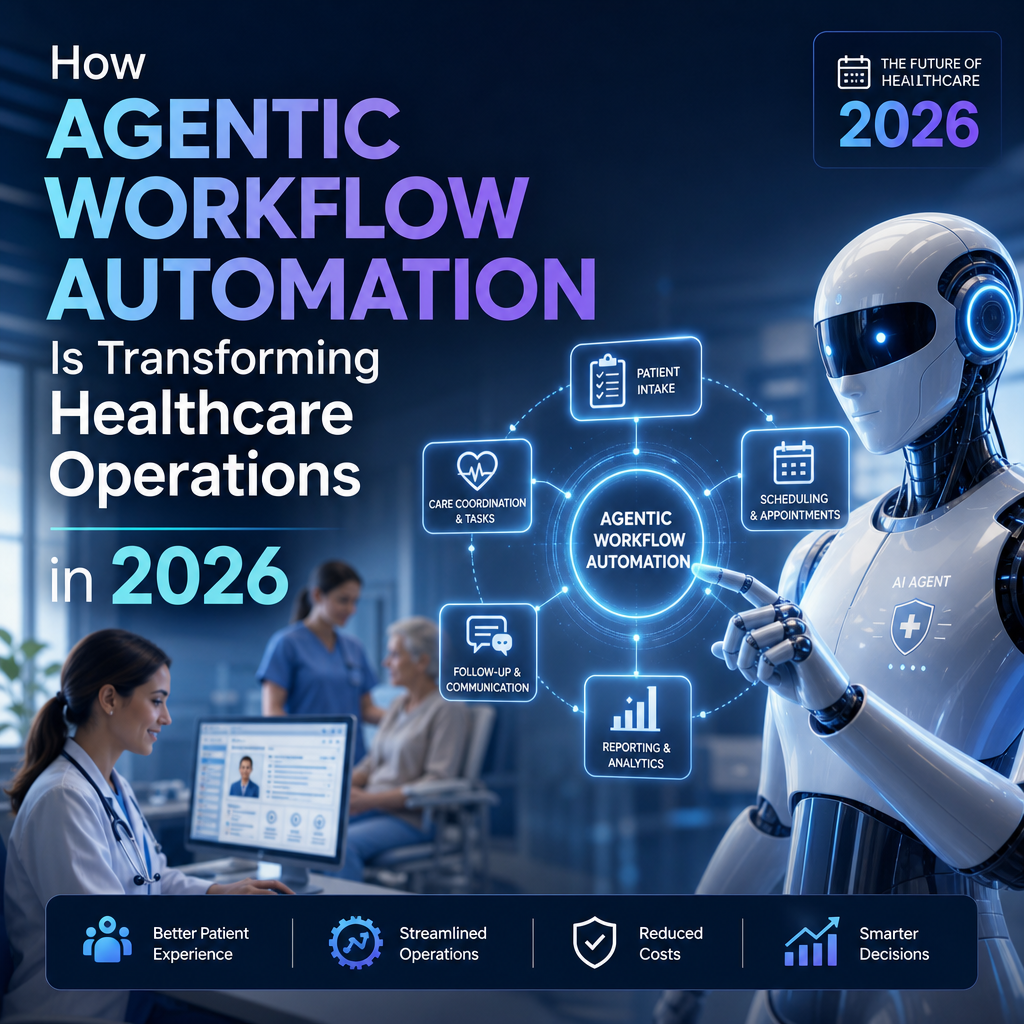
Agentic workflow automation refers to software agents that can independently carry out tasks, adapt to changing conditions, and collaborate with people and systems to complete workflows. In healthcare, these agents can help with everything from scheduling appointments to managing prior authorizations and supporting clinical documentation.

How it differs from traditional automation
Traditional automation is usually:

- Rule-based
- Narrow in scope
- Dependent on rigid triggers
- Limited when exceptions arise
Agentic systems are more flexible. They can:
- Interpret incoming information
- Decide next steps
- Escalate exceptions to staff
- Learn from workflow patterns
- Coordinate across multiple systems
This makes them especially valuable in healthcare, where no two cases are exactly alike.
Why Healthcare Needs It Now
Healthcare operations are full of repetitive but high-stakes tasks. A single patient journey may involve registration, insurance verification, eligibility checks, referrals, chart updates, follow-up scheduling, and billing. Each handoff creates room for delay or error.
Agentic workflow automation helps reduce these bottlenecks.
Key operational challenges it addresses
- Administrative overload on frontline staff
- Slow intake and scheduling processes
- Delays in prior authorization
- Fragmented communication between departments
- Documentation backlogs
- Revenue cycle inefficiencies
By automating these workflows intelligently, organizations can improve speed and reliability without sacrificing oversight.
Real-World Use Cases in 2026
In 2026, agentic automation is no longer theoretical. Healthcare systems, clinics, and payers are applying it in practical ways every day.
1. Patient intake and scheduling
Intelligent agents can guide patients through intake forms, verify insurance details, check provider availability, and suggest the best appointment type. If a patient needs urgent attention, the system can route the case appropriately.
This reduces front-desk workload and improves access to care.
2. Prior authorization support
Prior authorizations remain one of the most frustrating bottlenecks in healthcare. Agentic workflows can gather required documentation, identify missing items, submit requests, and monitor status updates. If a payer asks for additional information, the agent can alert the right staff member immediately.
3. Clinical documentation assistance
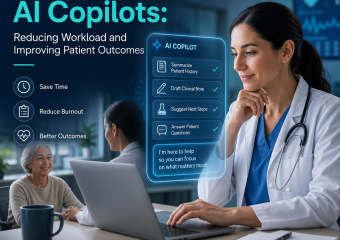
Agents can help clinicians summarize notes, extract key information from encounters, and prepare documentation for review. While clinicians still make the final decisions, automation reduces time spent on administrative charting.
4. Claims and revenue cycle workflows
In billing departments, agentic systems can detect claim errors, match codes to records, flag inconsistencies, and route exceptions for human review. This leads to fewer denials and faster reimbursement.
5. Discharge and follow-up coordination
After a hospital stay, agents can coordinate post-discharge instructions, schedule follow-up visits, remind patients about medications, and notify care teams if a patient reports concerns.
Benefits for Healthcare Organizations
Agentic workflow automation is attractive because it does more than save time. It can improve how the entire organization operates.
Operational benefits include:
- Faster turnaround times
- Reduced manual errors
- Better staff productivity
- Lower administrative costs
- Improved patient experience
- Stronger compliance tracking
For leaders, the biggest value is often visibility. Agentic systems can provide real-time insights into where workflows are slowing down and what types of cases need human attention.
Human Oversight Still Matters
Even as agentic automation becomes more capable, healthcare still requires human judgment. Patients are complex. Policies change. Clinical situations can escalate quickly.
The best implementations in 2026 use a human-in-the-loop model. Agents handle routine work, while staff oversee exceptions, sensitive decisions, and patient interactions that require empathy or expertise.
Best practices for safe deployment
- Define clear boundaries for automation
- Keep humans in control of critical decisions
- Audit workflows regularly
- Ensure data privacy and security
- Train staff to work alongside agents
- Monitor performance and bias carefully
This approach helps organizations gain efficiency without losing trust.
The Future of Healthcare Operations
As healthcare systems continue to digitize, agentic workflow automation will likely become a core operational layer rather than a nice-to-have tool. We are already seeing a shift from simple task automation to intelligent workflow orchestration—systems that can coordinate multiple steps, respond to exceptions, and keep work moving with minimal friction.
In the coming years, healthcare organizations that embrace these tools will be better positioned to handle growth, reduce burnout, and deliver more responsive care.
Conclusion
Agentic workflow automation is transforming healthcare operations in 2026 by making complex processes faster, smarter, and more adaptive. From scheduling and prior authorization to billing and discharge planning, these systems are helping teams work more efficiently while improving patient outcomes.
Healthcare will always need people at the center. But with the right automation strategy, those people can spend less time on paperwork and more time on what matters most: care.